
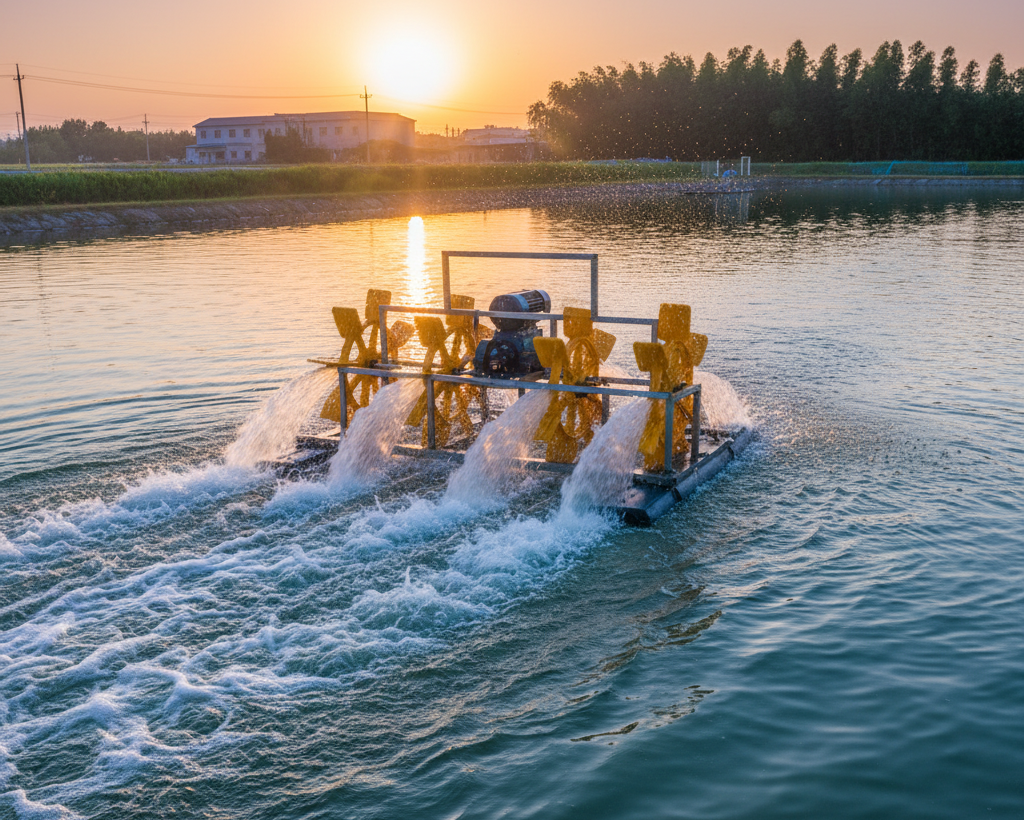
The Unsung Hero of Aquaculture: Why the Paddle Wheel Aerator is Essential Introduction: For anyone involved in aquaculture, ensuring optimal water quality is paramount. The difference between a thriving fish or shrimp pond and a struggling one often comes down to one crucial piece of equipment: the Paddle Wheel Aerator. These machines are the lungs of your pond, tirelessly working to keep aquatic life healthy. What Does a Paddle Wheel Aerator Do? Its function is simple but vital: it transfers oxygen from the air into the water, a process known as aeration. As the paddle wheels spin, they vigorously agitate the surface, creating maximum surface area contact between the water and the atmosphere. This action achieves two key goals: Dissolved Oxygen (DO) Boost: It replenishes the oxygen consumed by fish and decomposing organic matter, preventing low DO levels which can stress or kill your stock. Water Circulation: It creates a current that mixes the water column, preventing thermal stratification and distributing oxygen and nutrients evenly throughout the pond. The Benefits for Farmers: By maintaining high dissolved oxygen levels and preventing harmful water conditions, paddle wheel aerators directly contribute to: Faster Growth Rates: Healthier, less-stressed fish eat better and grow quicker. Higher Stocking Density: Allows you to raise more aquatic life per pond area. Reduced Disease Risk: Optimal water quality minimizes the need for costly treatments. Conclusion: A paddle wheel aerator is not just an expense; it’s an investment in the health and productivity of your aquaculture operation. It’s the single most effective way to manage water quality and ensure a profitable harvest.


This is your website preview.
Currently it only shows your basic business info. Start adding relevant business details such as description, images and products or services to gain your customers attention by using Boost 360 android app / iOS App / web portal.
Areator in india 08042753745
2025-11-17T05:16:06
The Unsung Hero of Aquaculture: Why the Paddle Wheel Aerator is Essential Introduction: For anyone involved in aquaculture, ensuring optimal water quality is paramount. The difference between a thriving fish or shrimp pond and a struggling one often comes down to one crucial piece of equipment: the Paddle Wheel Aerator. These machines are the lungs of your pond, tirelessly working to keep aquatic life healthy. What Does a Paddle Wheel Aerator Do? Its function is simple but vital: it transfers oxygen from the air into the water, a process known as aeration. As the paddle wheels spin, they vigorously agitate the surface, creating maximum surface area contact between the water and the atmosphere. This action achieves two key goals: Dissolved Oxygen (DO) Boost: It replenishes the oxygen consumed by fish and decomposing organic matter, preventing low DO levels which can stress or kill your stock. Water Circulation: It creates a current that mixes the water column, preventing thermal stratification and distributing oxygen and nutrients evenly throughout the pond. The Benefits for Farmers: By maintaining high dissolved oxygen levels and preventing harmful water conditions, paddle wheel aerators directly contribute to: Faster Growth Rates: Healthier, less-stressed fish eat better and grow quicker. Higher Stocking Density: Allows you to raise more aquatic life per pond area. Reduced Disease Risk: Optimal water quality minimizes the need for costly treatments. Conclusion: A paddle wheel aerator is not just an expense; it’s an investment in the health and productivity of your aquaculture operation. It’s the single most effective way to manage water quality and ensure a profitable harvest.
2025-11-17T05:16:06


Submit Your Enquiry